Hello and welcome back to my blog in 2026!
As you may have noticed, there’s a bit of a gap between #27 Thailand and #35 Morocco. That’s because I’m currently reworking older drafts (as mentioned in my 2026 Update), but I still wanted to stay current with new posts. So here we are – beautiful sunny Morocco stretching into the Sahara.

Moroccan cuisine is a fascinating mix of influences, and above all, it’s incredibly flavorful. For this week’s dinner, I decided to focus on a classic, home-style Moroccan meal built around kefta in tomato sauce and khobz bread.

Moroccan food is generally meant to be shared, eaten with the right hand, using pieces of soft khobz (bread) as the main utensil. Many dishes are sauce-forward and designed to be scooped rather than plated (think tagines, stews, and cooked salads). I don’t personally own a tagine, but a good pan with a lid worked perfectly well too!
As I learned while researching, Moroccan culture and cuisine are deeply rooted in Amazigh (Berber) traditions. Staples like flatbreads, olive oil, and communal eating patterns come from this foundation. Over time, additional influences shaped the cuisine: the Arab-Islamic expansion brought new ingredients and food structures, global trade introduced products from the Americas like tomatoes and peppers, and later French and Spanish colonial periods left their marks, especially in baking and café culture.
The Dinner
When planning this meal, I had a wide range of both modern and traditional Moroccan dishes to choose from: chicken tagines, slow-simmered seven-vegetable couscous, and many more.
In the end, I landed on the following combination:
- Kefta mkaouara – tiny spiced meatballs simmered in tomato sauce finished with eggs
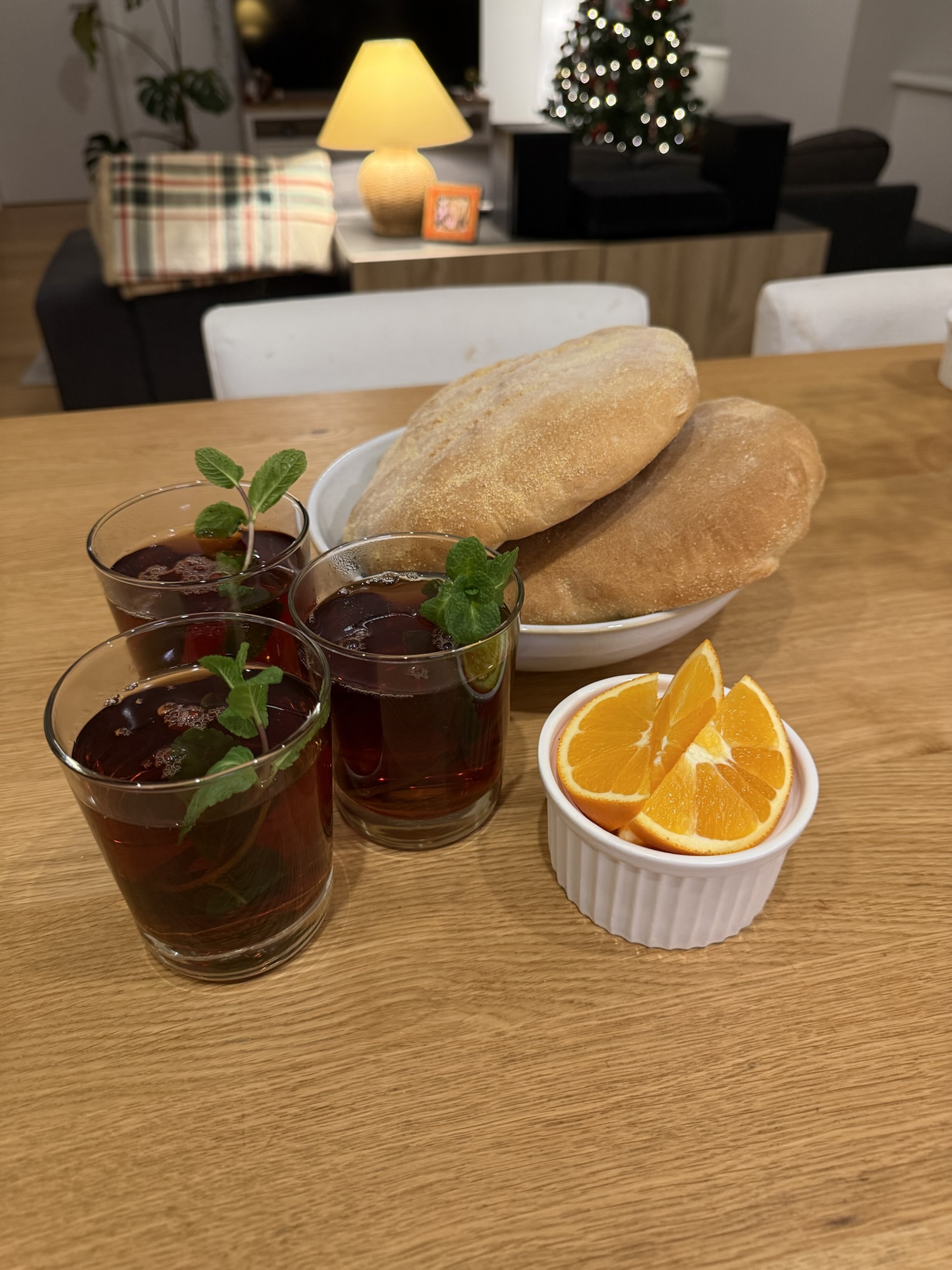
- Khobz – classic Moroccan round bread, the smell fresh from the oven was amazing!
- Zaalouk – cooked, creamy eggplant and tomato salad
- Olives – an everyday table staple
- Meskouta & mint tea – a light Moroccan sponge cake served with sweet mint tea
Recipes sourced from the wonderful Taste of Maroc & My Moroccan Food!

The meal felt complete without being heavy. Scooping creamy zaalouk and richly spiced kefta with bread felt intuitive, and it made for a very satisfying dinner.
What surprised me most was how familiar the flavors felt, despite this being my first time cooking Moroccan food. That said, this menu doesn’t include some of the more immediately recognizable Moroccan ingredients like preserved lemons or ras el hanout, which might have pushed the flavor profile further into unfamiliar territory.

If you’re from Morocco or have experience with Moroccan food, I’d love to hear your thoughts.
How did I do?
Did I miss the mark entirely or would you have been happy to be served this meal?
I’m still deciding which country to cook next, but stay tuned, there’s plenty more on the way!
Until next time! 🧳
Leave a Reply